Why Choose a Spray Hose for Industrial Applications?

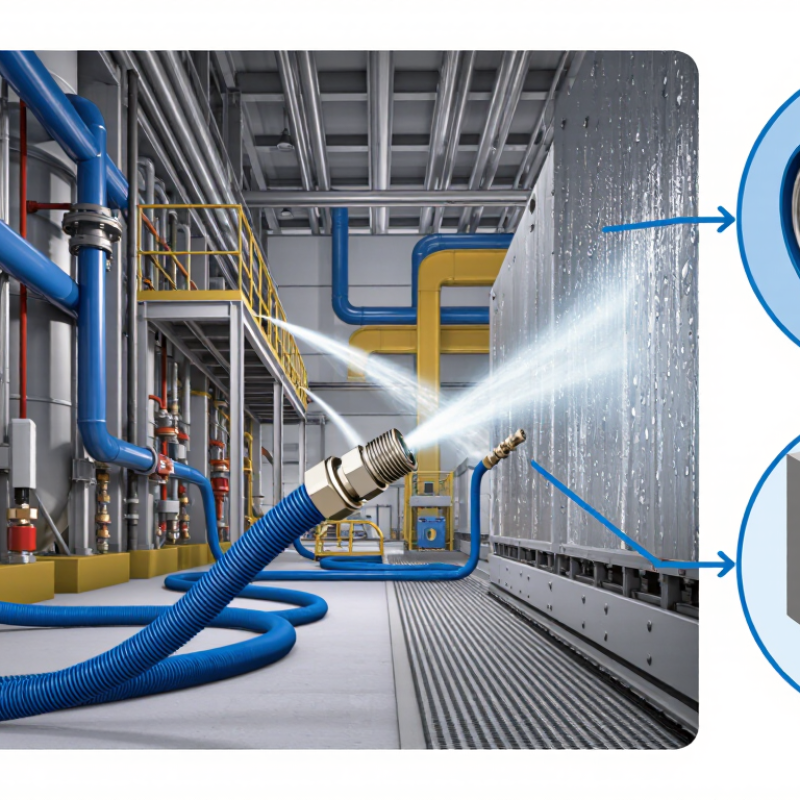
In industrial environments, fluid transfer is rarely as simple as connecting a pipe. A hose may face pressure, heat, abrasion, chemicals, or constant movement. This is where a Spray Hose can offer practical control and dependable delivery. Designed for spraying water, cleaning agents, coatings, or other approved fluids, it supports tasks that demand reach and flexibility. Operators can guide the stream around machinery, platforms, and narrow work areas. Less rigid than fixed piping. More adaptable on the factory floor.

Choosing the right model requires more than checking diameter. Experienced maintenance teams examine working pressure, temperature range, fluid compatibility, bend radius, and coupling quality. A hose that feels strong may still fail when exposed to the wrong chemical or repeated flexing. Manufacturers and safety specialists commonly recommend reviewing technical data sheets and actual operating conditions before purchase. In practice, a reinforced Spray Hose can reduce handling strain and limit unexpected downtime, but only when its construction matches the application. Small details matter, including storage, inspection, and proper fitting.

This guide explores why industrial users choose spray hoses and where their advantages become clear. It also considers limitations that are easy to overlook. No product is universally suitable. A hose may kink, wear, or lose performance when maintenance is treated as an afterthought. Regular checks for cracks, swelling, leaks, and damaged couplings help reveal problems early. Still, selection decisions should be reviewed honestly, especially when conditions change. The goal is not simply stronger spraying. It is safer, more efficient fluid handling supported by informed judgment and reliable equipment.
Why Choose a Spray Hose for Industrial Applications?

What Is a Spray Hose and How Does It Work?

A spray hose is a flexible industrial line that carries liquid, air, or mixed fluid to a spray device. Its inner tube contacts the material, while reinforcement layers resist pressure and stretching. An outer cover protects against abrasion, sunlight, oil, and changing temperatures. Some hoses feel soft in the hand, but their internal structure can be highly engineered.

A pump pushes fluid through the hose. When the spray gun valve opens, pressure moves the fluid toward the nozzle. The nozzle then breaks the flow into controlled droplets or a focused stream. Droplet size depends on pressure, fluid thickness, nozzle design, and hose condition. In practical maintenance work, uneven spray often points to a blocked nozzle, trapped air, or a damaged hose. Pressure alone is not always the answer. A hose that exceeds its bend radius may weaken quietly, which is easy to overlook.

Tips: Check pressure and temperature ratings before use. Confirm chemical compatibility with the hose material. Inspect fittings, cuts, bulges, and soft spots before every shift. Keep the hose away from sharp edges and hot surfaces. Drain and clean it according to the fluid’s requirements. Replace questionable assemblies rather than relying on tape or temporary repairs. Record inspection dates, because memory becomes unreliable during busy production periods.

Which Industrial Tasks Require a Spray Hose?

Spray hoses are useful when industrial work demands controlled water, air, foam, or compatible cleaning fluids.

They direct flow into a specific area without moving heavy rigid piping. This makes them practical around processing lines, workshops, storage yards, and maintenance stations.

Which industrial tasks require a spray hose? Equipment washing is a common example. Operators can rinse conveyor frames, machine guards, floors, and hard-to-reach joints. Spray hoses also support dust suppression near material handling areas.

A controlled mist can reduce airborne particles around aggregate, cement, or mineral operations. They help with concrete curing too, especially across large slabs where even moisture matters. Some facilities use them for tank rinsing, cooling surfaces, or applying approved cleaning solutions. Food processing sites may need hoses designed for frequent sanitation and temperature changes.

Choose carefully. Check working pressure, temperature range, inner-tube material, bend radius, and coupling security. Chemical compatibility matters more than appearance.

A hose can look sound while its inner layer is weakening. I once treated a minor surface crack as harmless. It was not. The hose later developed a leak near the fitting.

Regular inspections should examine cuts, blistering, stiffness, exposed reinforcement, and loose connections. Operators should also avoid dragging hoses across sharp edges or leaving them under hot equipment. Spray patterns deserve attention as well. A narrow jet may damage surfaces, while a broad fan can waste water. The right hose depends on the task, fluid, distance, and pressure control. Small details change performance.

What Materials and Designs Improve Spray Hose Performance?

Why Choose a Spray Hose for Industrial Applications?

A spray hose must match the fluid, pressure, temperature, and working environment. In field inspections, I have seen ordinary hoses soften near hot equipment or crack after repeated bending. Material selection prevents these failures. Nitrile suits many oil-based fluids, while EPDM handles heat, water, and several mild chemicals. PTFE offers strong chemical resistance, but it can be less flexible and more expensive. No material is universal.

The inner tube should have a smooth bore. This reduces turbulence and helps maintain a steady spray pattern. Reinforcement layers also matter. Textile braiding supports moderate pressure and keeps the hose flexible. Steel braiding provides greater pressure resistance, although it increases weight and reduces bendability. A protective outer cover should resist abrasion, sunlight, and contact with rough machinery. Static-dissipative construction may be necessary when fluid movement creates electrical charge.

Design details often decide service life. A generous bend radius reduces kinking near fittings, while properly crimped connections prevent leaks under vibration. Temperature and pressure ratings must reflect real operating conditions, not ideal laboratory values. Thicker is not always better. I once selected a heavily reinforced hose that lasted well but made routine handling unnecessarily difficult. That choice needed more reflection. Inspect the hose regularly for blisters, flattening, exposed reinforcement, and stiff sections. Small changes can signal a larger failure.

How Does a Spray Hose Enhance Safety and Efficiency?

Why Choose a Spray Hose for Industrial Applications?

A spray hose can improve safety by moving operators away from hot, wet, or contaminated surfaces. Its controlled nozzle reduces splashing and directs fluid toward the target. Less overspray means fewer slippery patches around machinery. That matters in busy production areas.

The U.S. Bureau of Labor Statistics reported 2.6 million nonfatal workplace injuries and illnesses in private industry during 2023. Not every incident involves fluid handling, but poor access and manual exposure remain practical risks. A correctly rated hose, secure coupling, and visible pressure limit help control them. Small details matter. Operators should inspect abrasion, swelling, leaks, and connector movement before each shift.

Efficiency also improves when spray patterns match the task. A narrow pattern can clean a groove, while a wider pattern covers equipment faster. The U.K. Health and Safety Executive reported 1.7 million self-reported workplace injuries in 2023/24. Better hose placement may reduce awkward reaching and repeated lifting. It may also lower water or chemical waste when flow is adjusted precisely. However, a spray hose is not a magic shield. Excessive pressure can damage surfaces, create mist, or cause loss of control. Selection should follow the fluid, temperature, pressure, bend radius, and workplace risk assessment. One overlooked issue is storage; a hose dragged across a sharp edge can fail long before its rated service life.

What Factors Should Guide Your Spray Hose Selection?

Selecting a spray hose is less about maximum pressure and more about matching real operating conditions. The hose must tolerate working pressure, surge pressure, temperature, fluid chemistry, and bending frequency. ISO 18752:2014 classifies rubber hoses by pressure, application, and impulse performance, which gives engineers a stronger basis than appearance alone. A bright cover is not proof of compatibility.

Check the connection before the hose. A mismatched fitting can create leakage, pressure loss, or sudden separation. OSHA’s general machine-safety guidance requires compressed-air connections to prevent accidental disconnection, and its 30 psi cleaning limit is a useful reminder: pressure control matters. For abrasive liquids, inspect the inner tube specification and measure wear near the nozzle. Small details matter here. A hose that feels flexible may still collapse under suction or kink behind a pump.

Field maintenance reports often show that heat, sunlight, chemicals, and repeated flexing shorten service life faster than catalog estimates. The U.S. Bureau of Labor Statistics recorded 5,283 fatal workplace injuries in 2023, reinforcing the need for disciplined equipment checks, although that figure covers all industries and not hoses alone. Select a hose with a documented safety factor, traceable test data, and visible inspection markings. Do not rely only on pressure ratings. I would also record installation date, fluid type, and bending points. That practice is simple, but it is easy to neglect.

Why Choose a Spray Hose for Industrial Applications? - What Factors Should Guide Your Spray Hose Selection?

Selection Factor Typical Industrial Consideration Why It Matters Recommended Selection Guidance
Fluid or Chemical Compatibility Water, detergents, oils, solvents, acids, alkalis, coatings, or agricultural chemicals An incompatible tube or cover can swell, harden, crack, soften, or contaminate the conveyed fluid. Verify the hose material against the exact fluid, concentration, temperature, and exposure time. Use a chemical-resistance chart from the hose manufacturer.
Working Pressure Common industrial spray hoses are available with working-pressure ratings from approximately 10 bar to more than 400 bar, depending on construction and size. Insufficient pressure capacity can cause premature failure, leakage, or hose rupture. Select a hose whose working-pressure rating exceeds the maximum system pressure, including pressure spikes. Never use burst pressure as the operating limit.
Temperature Range Many general-purpose rubber and thermoplastic hoses operate roughly between −40°C and +100°C; specialized designs may support higher temperatures. Excessive heat accelerates aging, while low temperatures can reduce flexibility and increase cracking risk. Base the selection on both the fluid temperature and the surrounding ambient temperature. Account for short-term temperature peaks.
Hose Inner Diameter Typical industrial spray hoses range from about 6 mm to 50 mm inside diameter, with larger sizes available for high-flow systems. A diameter that is too small increases pressure loss and reduces flow; an oversized hose can add unnecessary weight and cost. Choose the diameter according to required flow rate, allowable pressure drop, hose length, and spray-nozzle requirements.
Flow Rate and Pressure Drop Pressure loss increases with flow velocity, hose length, fittings, bends, and restrictions. Excessive pressure drop can reduce spray quality, cleaning performance, and process consistency. Calculate the required flow and pressure at the spray point rather than selecting by connection size alone.
Flexibility and Minimum Bend Radius Minimum bend radius varies by hose construction; smaller-radius designs are generally more flexible but may have lower pressure or temperature limits. Bending below the specified radius can kink the hose, restrict flow, and damage reinforcement. Measure the tightest bend in the installation and choose a hose with a suitable minimum bend radius. Do not use the hose as a hinge at the fitting.
Abrasion and External Wear Dragging, contact with sharp edges, vibration, vehicle traffic, and abrasive materials can damage the outer cover. Cover damage can expose reinforcement and shorten service life, particularly in mobile applications. Use an abrasion-resistant cover, protective sleeve, or hose guide where rubbing and dragging cannot be avoided.
Reinforcement Construction Common reinforcement types include textile braid, synthetic fiber, wire braid, and wire spiral. Reinforcement determines pressure capability, flexibility, crush resistance, and weight. Use textile reinforcement for lighter-duty flexibility and wire-reinforced construction for higher-pressure or more demanding service.
Electrical Conductivity Some applications require a conductive or antistatic hose, especially when flammable fluids, vapors, or electrostatic charge are present. Static buildup can create ignition, equipment, or product-quality hazards. Confirm the required electrical-resistance specification and ensure the complete hose assembly is properly grounded where required.
Fittings and Connection Standard Connections may use threaded, quick-connect, cam-and-groove, sanitary, or flanged fittings in different dimensional standards. Incorrect thread type, sealing method, or fitting material can cause leaks and assembly failure. Match fitting size, thread form, pressure rating, material, and sealing method to the equipment and conveyed fluid.
Spray Pattern and Nozzle Performance Spray results depend on stable pressure, consistent flow, nozzle geometry, and the hose's internal condition. Pulsation, kinking, or excessive pressure loss can produce uneven coverage and inconsistent application rates. Select a hose that maintains the required pressure and flow at the nozzle throughout the operating cycle.
Length and Handling Longer hoses improve reach but add weight, storage requirements, pressure loss, and potential snag points. Poor length selection can reduce operator efficiency and increase wear or handling injuries. Use the shortest practical length, provide adequate movement allowance, and install reels, supports, or routing guides when appropriate.
Cleaning and Maintenance Food, pharmaceutical, paint, and chemical processes may require flushing, drainage, or special cleaning procedures. Residue, contamination, and blocked passages can affect product quality and operating safety. Choose a smooth-bore hose and compatible construction where cleaning is critical. Inspect for blisters, cuts, kinks, exposed reinforcement, and fitting damage.
Applicable Safety Requirements Requirements may apply to high-pressure water, hazardous chemicals, food contact, static control, or hazardous locations. Compliance affects personnel safety, approval status, traceability, and insurance or regulatory obligations. Review the applicable local regulations, industry standards, pressure-equipment rules, and site procedures before purchasing or commissioning the hose.

Note: Pressure, temperature, chemical-resistance, bend-radius, and flow figures are typical industry ranges or selection principles. Always confirm the exact rating of the complete hose assembly, including fittings, before use.