Choosing reliable Forged Structural Parts manufacturers requires more than comparing prices or browsing polished supplier websites. Global buyers need evidence of engineering competence, production consistency, and dependable export performance. A forged crane hook, railway coupling, pressure-vessel fitting, or heavy equipment link may appear simple, yet each component carries demanding loads and serious safety responsibilities.
This guide introduces leading manufacturers serving international markets. It considers forging capacity, material control, heat-treatment systems, machining accuracy, and inspection practices. Strong suppliers can provide mill certificates, dimensional reports, non-destructive testing records, and traceable batch numbers. Their facilities should show practical capability, not only impressive claims. Look for controlled dies, calibrated testing equipment, clean storage areas, and experienced quality teams.
Details matter. A buyer should ask how the manufacturer manages grain flow, surface defects, tolerances, and production changes. Certifications can support trust, but they do not replace factory audits or sample testing. That point is often overlooked. Delivery schedules, packaging strength, communication speed, and after-sales support also influence total purchasing risk. A low quotation may become expensive after rework, delayed installation, or rejected parts.
Manufacturers differ in specialization, regional advantages, and technical responsiveness. Some excel at large carbon-steel forgings, while others focus on stainless alloys or complex machined parts. The best choice depends on load requirements, standards, order volume, and application conditions. No supplier is perfect. Even experienced buyers should verify assumptions, challenge unclear data, and reassess performance after the first shipment. This practical approach helps global buyers identify dependable Forged Structural Parts partners with greater confidence.
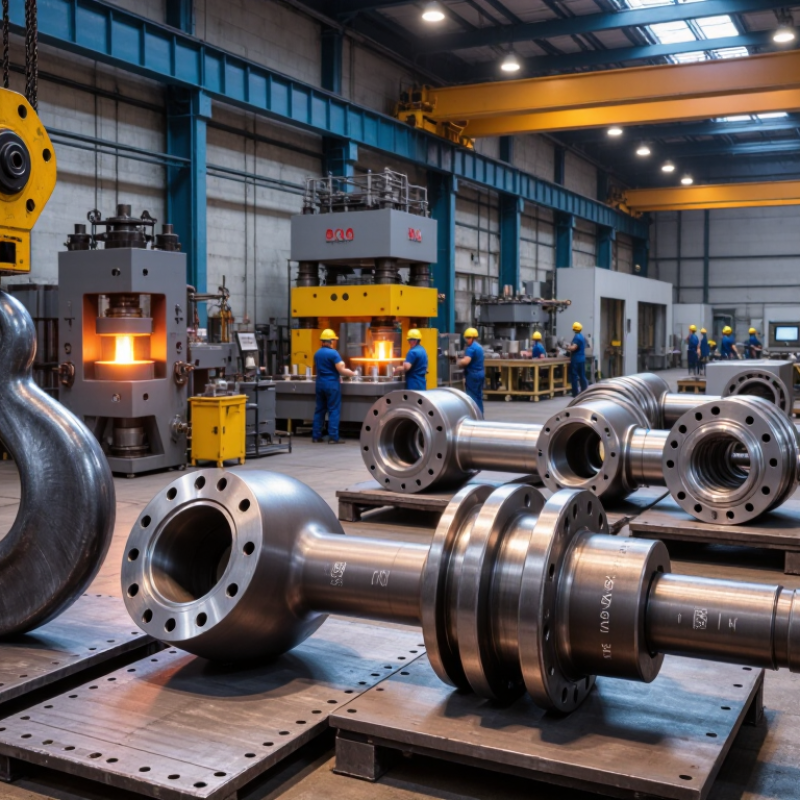
Forged structural parts are load-bearing components shaped under controlled heat and pressure. Unlike cast pieces, they develop aligned grain flow and a compact internal structure. This can improve strength, fatigue resistance, and reliability in demanding service. Typical examples include crane hooks, bridge connectors, rail components, excavator links, and heavy-equipment pins. The process starts with a billet, not a finished miracle. Engineers heat steel or another approved alloy, then form it between dies or with a press. After forging, heat treatment, machining, and inspection define the usable part.
These components operate where sudden loads and repeated motion are normal. In construction machinery, a forged pivot pin may carry thousands of load cycles while exposed to dust and vibration. In bridges, forged connection elements help transfer forces through joints without unnecessary bulk. Rail systems use them in couplers, suspension hardware, and other safety-critical assemblies. Energy and industrial plants also need forged shafts, flanges, brackets, and lifting hardware. Dimensions alone do not prove suitability. Material traceability, ultrasonic testing, hardness checks, and dimensional reports matter to global buyers. A dependable manufacturer should explain its forging capacity, tolerances, standards, and inspection records clearly.
Real purchasing decisions are less tidy. A low unit price may hide extra machining, delayed samples, or weak documentation. Buyers should compare drawings, service loads, surface conditions, packaging, and delivery terms together. Small design changes can affect die cost and lead time more than expected. That assumption deserves review. Clear technical communication often prevents expensive rework, especially when metric dimensions and testing requirements cross borders. Ask for representative samples and independent verification when the application carries serious risk.

Forged structural parts are load-bearing components shaped through controlled plastic deformation, typically using compressive force. Their refined grain flow and high strength make them suitable for demanding applications such as automotive driveline systems, construction equipment, industrial machinery, energy infrastructure, and aerospace assemblies.
The chart compares representative minimum tensile-strength values for commonly forged structural materials and conditions. Actual performance varies with standard, heat treatment, product size, and specification. Reference grades include C45, 42CrMo4, 34CrNiMo6, 17-4 PH, Ti-6Al-4V, and 6061-T6.
Choosing a forged structural parts manufacturer requires more than comparing unit prices. Review its experience with similar loads, geometries, materials, and production volumes. Ask for sample drawings, inspection records, and measurable results from previous projects. A capable manufacturer should explain how heating temperature, die design, and cooling affect strength.
Request complete material traceability, including heat numbers, chemical analysis, and mechanical test results. Check whether inspectors perform dimensional checks, ultrasonic testing, magnetic particle testing, or other suitable examinations.
Visit the production site if possible. Look at furnace controls, forging presses, machining areas, and calibration labels. Details matter.
Confirm the supplier’s quality system and document control process. Clear procedures reduce mistakes between engineering, purchasing, and production teams. Ask how nonconforming parts are isolated and corrected. The answer should include evidence, not vague promises.
Review delivery capacity, packaging methods, export documents, and communication routines before signing a contract.
I once overlooked packaging during a supplier review. Several machined surfaces later showed minor corrosion after sea transport. The forging quality was acceptable, but the process was incomplete. That experience changed my checklist.
Reliable manufacturers welcome technical questions, disclose limitations, and propose practical improvements. No supplier is perfect. Be cautious when every answer sounds perfect.
Leading forged structural parts manufacturers serve international buyers through controlled production, clear documentation, and responsive technical support. Their teams understand that a bridge connection, crane component, or industrial shaft cannot rely on appearance alone. Material certificates, heat numbers, dimensional reports, and inspection records should follow each shipment. Experienced manufacturers also use process controls for forging temperature, die alignment, heat treatment, and machining accuracy.
Reliable suppliers communicate before problems become expensive. They confirm drawings, tolerances, loading conditions, packaging needs, and destination requirements. Many support sample approval and independent inspection when risk is high. We have seen projects slow down because a small thread detail was assumed, not confirmed. No supplier is perfect. However, a professional manufacturer records deviations, explains their causes, and improves the process instead of hiding them. That behavior matters to buyers managing long-distance procurement.
Tips: Ask for recent inspection examples and traceability procedures. Confirm production capacity during your peak demand, not only during a trial order. Review export packaging with actual photos, especially for heavy parts exposed to moisture. Request a realistic delivery schedule with inspection time included. A lower quotation may look attractive, but unclear tolerances and weak communication can create higher costs later. When possible, compare technical answers, not just prices, before approving a supplier.
Global buyers should compare forged structural parts manufacturers by verified capability, not certificate count alone. The World Steel Association reported about 1.89 billion tonnes of crude steel production in 2023. That scale makes material traceability essential. Strong suppliers identify heat numbers, forging temperatures, reduction ratios, and final inspection results.
Capability begins with process range. Ask whether a manufacturer operates open-die, closed-die, or ring-rolling equipment. Check maximum forging weight, press capacity, die-design software, and heat-treatment control. In-house machining and ultrasonic testing can reduce handoffs. The ISO Survey 2023 recorded 1,265,216 ISO 9001 certificates worldwide. Yet ISO 9001 confirms a quality system, not automatic forging expertise. That distinction matters.
Certifications should match the application. ISO 9001 supports controlled production, while ISO 14001 and ISO 45001 address environmental and workplace systems. EN 10204 inspection documents help buyers verify chemical results and mechanical properties. Aerospace projects may require AS9100, while automotive programs often demand IATF 16949. Review certificate scope, issuing body, expiry date, and covered site. A certificate can be current and still reveal little about die wear. Request sample material certificates, tensile reports, hardness maps, and non-destructive testing records. Short audits help. I would also examine corrective-action history, because every supplier has defects; transparent learning is more valuable than polished claims.
| Anonymous Manufacturer Type | Primary Forging Process | Typical Part Weight | Typical Material Scope | Typical Size Range | Common Secondary Operations | Inspection and Traceability | Relevant Certifications or Standards | Best Fit for Global Buyers |
|---|---|---|---|---|---|---|---|---|
| Closed-Die Steel Forging Specialist | Hot closed-die forging using mechanical or hydraulic presses | Approximately 0.1–50 kg per part | Carbon steel, alloy steel, stainless steel, and selected microalloyed steels | Small to medium structural components; dimensions depend on press capacity and die design | Heat treatment, shot blasting, trimming, calibration, CNC machining, and surface protection | Chemical analysis, hardness testing, dimensional inspection, magnetic-particle testing, and batch traceability | ISO 9001; EN 10204 inspection documents; ASTM, ASME, EN, or customer-specific material requirements | High-volume structural brackets, clevises, flanges, joints, and load-bearing fittings |
| Open-Die Heavy Forging Specialist | Open-die forging with hydraulic presses, hammers, or upsetters | Approximately 50 kg to more than 100 tonnes | Carbon steel, low-alloy steel, stainless steel, nickel alloys, and selected titanium grades | Large shafts, rings, blocks, discs, hubs, and custom structural sections | Heat treatment, rough machining, ring rolling, straightening, ultrasonic testing, and final machining | Ultrasonic testing, visual inspection, dimensional control, mechanical testing, and full heat-lot traceability | ISO 9001; ISO 14001; EN 10204; ASTM A788 or applicable ASTM, EN, and customer specifications | Large frames, pressure-equipment components, heavy machinery shafts, and energy-sector structures |
| Precision Warm-Forging Manufacturer | Warm forging, generally performed below hot-forging temperatures | Approximately 0.05–20 kg per part | Medium-carbon steel, alloy steel, stainless steel, and selected aluminum alloys | Small to medium parts requiring tighter dimensional control and reduced machining allowance | CNC turning, milling, broaching, drilling, deburring, and controlled heat treatment | Coordinate-measuring inspection, hardness testing, surface checks, and statistical process control | ISO 9001; IATF 16949 where automotive supply is supported; customer PPAP requirements where applicable | Precision hubs, transmission-related components, pins, yokes, and repeat-production structural parts |
| Aluminum and Non-Ferrous Forging Specialist | Hot closed-die, precision, or upset forging for non-ferrous alloys | Approximately 0.05–25 kg per part | Wrought aluminum alloys, copper alloys, and selected nickel-based alloys | Small to medium lightweight structural parts | Solution heat treatment, aging, CNC machining, anodizing, coating, and shot peening | Conductivity or hardness checks, dimensional inspection, dye-penetrant testing, and alloy-lot traceability | ISO 9001; ISO 14001; applicable ASTM, EN, AMS, or customer material specifications | Weight-sensitive frames, brackets, housings, aircraft-support structures, and corrosion-conscious applications |
| Ring-Rolling and Seamless-Ring Manufacturer | Rolled-ring forging from pierced and preformed blanks | Approximately 1 kg to more than 10 tonnes | Carbon steel, alloy steel, stainless steel, nickel alloys, and titanium alloys | Small rings through large-diameter seamless rings; limits depend on rolling equipment | Heat treatment, machining, ultrasonic testing, magnetic-particle testing, and dimensional finishing | Radial and axial dimensional checks, ultrasonic testing, hardness mapping, and material certificates | ISO 9001; EN 10204; applicable ASTM, EN, ASME, or pressure-equipment quality requirements | Flanges, bearing rings, gear rings, pressure vessels, wind-energy structures, and rotating equipment |
| Integrated Forging and Machining Supplier | Hot or warm forging combined with in-house CNC production | Approximately 0.1–100 kg per part | Carbon steel, alloy steel, stainless steel, aluminum alloys, and ductile or forged specialty grades | Small to medium complex parts with finished machining requirements | Turning, milling, drilling, grinding, broaching, heat treatment, coating, and assembly | CMM inspection, gauge calibration, process capability studies, NDT, and serialized or lot-based traceability | ISO 9001; IATF 16949 for qualified automotive production; ISO 45001 and ISO 14001 may be applicable | Buyers seeking fewer subcontractors, controlled lead times, and finished-to-drawing structural assemblies |
| Aerospace-Qualified Forging Manufacturer | Closed-die, open-die, or precision forging under controlled aerospace procedures | Approximately 0.1–500 kg per part, depending on alloy and equipment | Aerospace-grade aluminum, titanium, nickel alloys, and high-strength steels | Small to medium structural parts, with selected facilities supporting larger forgings | Heat treatment, CNC machining, shot peening, surface treatment, NDT, and detailed documentation | Ultrasonic, dye-penetrant, magnetic-particle, radiographic testing where specified, plus complete genealogy | AS9100; ISO 9001; Nadcap accreditation may apply to special processes and testing; AMS specifications | Safety-critical or highly regulated components requiring rigorous process control and documentation |
Global buyers should select forged structural parts through evidence, not attractive quotations alone. Start with a complete drawing, material grade, dimensions, load requirements, and applicable standards. Missing tolerances often create expensive disputes later. Ask the manufacturer to explain its forging method, die capability, heat treatment, and machining limits in clear technical language.
Request material certificates, heat-treatment records, dimensional reports, and inspection results with every production batch. Traceability should connect the raw steel to the finished part. An experienced supplier can also provide ultrasonic testing, magnetic particle inspection, or hardness data when the application requires them. During a factory audit, check forging presses, calibration records, storage areas, and nonconforming-product controls. Small details matter. A clean inspection room does not prove consistent production.
Before placing a large order, approve a sample or pilot batch. Compare its dimensions, surface condition, hardness, and documentation with your specifications. Discuss packaging, corrosion protection, delivery terms, spare quantities, and communication procedures before signing. A low price may hide weak testing or unstable lead times. I have seen buyers focus heavily on unit cost and overlook rework expenses. That mistake is understandable, but avoidable. No checklist catches every problem. Keep written approval records, define corrective-action deadlines, and review supplier performance after delivery. This creates a more reliable purchasing process for demanding global projects.
Same Day Shipping
ISO Certified Production