What Is a Fire Pump Hose and How Does It Work?
A Fire Pump Hose is more than a flexible tube attached to emergency equipment. It is a critical link between a fire pump, a water source, and the people controlling the response. When pressure rises, the hose must carry large volumes of water without twisting, bursting, or losing its connection. The details matter.
Fire protection engineer Russ Sanders has often emphasized a practical principle: “A fire pump is only as reliable as the system supporting it.” That observation applies directly to every Fire Pump Hose. The pump may generate strong pressure, but the hose, couplings, gaskets, and valves must work together. A damaged lining can restrict flow. A loose coupling can create a dangerous spray. Poor storage can leave permanent bends in the hose.
Inside this guide, we will examine what a Fire Pump Hose is, how it transfers pressurized water, and which components influence its performance. We will also consider hose diameter, working pressure, temperature limits, connection methods, inspection routines, and common installation mistakes. These details may seem basic. They are not.
A practical inspection might reveal cracked rubber, flattened sections, or corrosion around a coupling. Any of these warning signs deserves attention before an emergency occurs. Still, no hose system is perfectly protected from aging, misuse, or human error. That is worth admitting. Reliable fire protection depends on regular testing, competent installation, clear maintenance records, and decisions based on recognized safety standards rather than appearance alone.
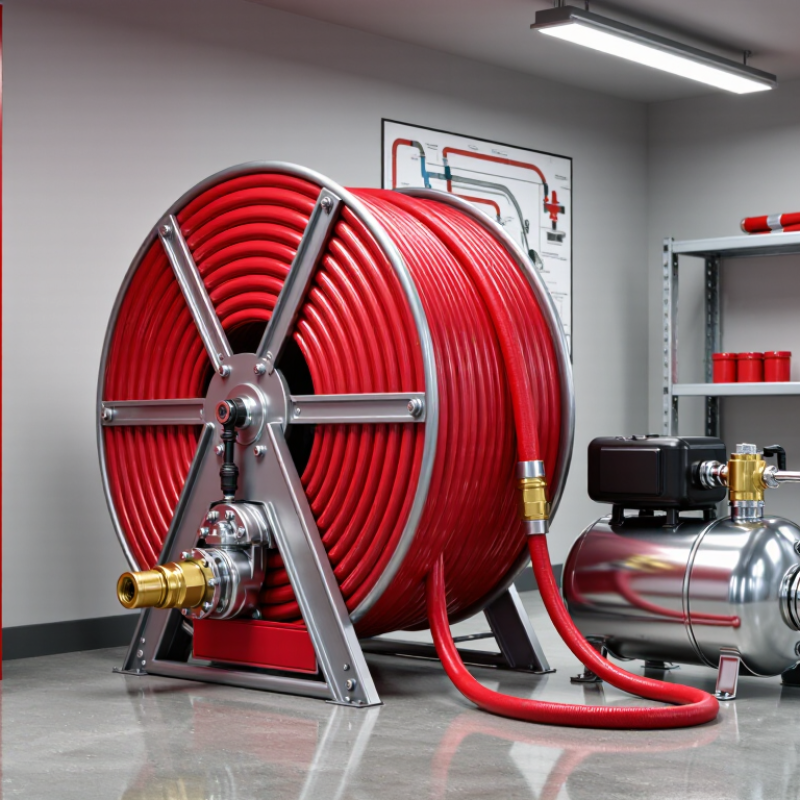
What a Fire Pump Hose Is and Its Role in Firefighting
What Is a Fire Pump Hose and How Does It Work?
A fire pump hose carries pressurized water from a pump to attack lines, standpipes, or other firefighting equipment. It is not simply a larger garden hose. Its jacket, lining, couplings, and pressure rating must match the pump system. Suction hose is built differently because it must resist collapse while drawing water from a tank, hydrant, or open source. Discharge hose carries water away from the pump under pressure.
The operating principle is direct. The pump raises water pressure, and the hose transfers that flow to the fireground. Couplings must lock securely, while the lining should limit friction and preserve usable flow. NFPA 1961, Standard on Fire Hose, addresses hose construction, testing, and performance. That matters because NFPA estimated 1,388,500 fires in the United States during 2023, causing 3,670 civilian deaths and about 22.1 billion dollars in direct property damage. The figures come from NFPA’s Fire Loss in the United States During 2023 report.
Small defects matter. A kink can restrict flow. A damaged coupling can leak under pressure. Field crews commonly inspect hoses for cuts, abrasion, heat damage, and weak gaskets before deployment. Testing schedules still vary by department, which deserves honest review. A hose may look serviceable while hiding internal wear. USFA guidance also emphasizes inspection, maintenance, and documented testing as part of reliable fireground equipment management.
Key Components and Materials of a Fire Pump Hose
A fire pump hose transfers pressurized water from the pump to a hydrant line, standpipe, or firefighting appliance. Its construction matters more than appearance. The National Fire Protection Association reported 1,504,500 fires in the United States during 2022, showing why dependable water delivery remains critical (NFPA, Fire Loss in the United States During 2022).
The inner tube carries water and must resist heat, pressure, and chemical degradation. Common materials include EPDM rubber, nitrile rubber, and thermoplastic compounds. EPDM performs well with water and outdoor exposure. Nitrile can offer stronger resistance to oils and fuels. Thermoplastic liners may reduce weight, but flexibility can change in cold conditions. Material choice is never universal.
The reinforcement layer usually contains woven polyester, nylon, or similar high-strength fibers. It controls expansion under pressure. The outer cover protects against abrasion, sunlight, moisture, and rough concrete. Couplings connect the hose to the pump and discharge equipment. They typically use corrosion-resistant metal, with gaskets that maintain a watertight seal. Small defects matter. A damaged gasket can waste pressure quickly.
NFPA 1961 establishes performance and testing requirements for fire hose, while pump installations must also follow NFPA 20 requirements. Actual working pressure depends on the complete assembly, not the hose alone. Field inspections should check cover cuts, coupling deformation, stiffness, and stored moisture. A hose may look serviceable while hiding internal damage. Inspection records are sometimes incomplete, and that weakness deserves attention. Tests must follow the applicable standard and manufacturer instructions.
How Firefighters Deploy and Control the Hose
A fire pump hose carries pressurized water from the pump to the nozzle. Its work is mechanical, but deployment is tactical. Firefighters select hose diameter, length, and nozzle type according to the building, fire load, and available water supply. NFPA’s Fire Loss in the United States During 2022 reported about 1.5 million fires nationwide. That scale makes disciplined hose handling essential, not optional.
The pump operator establishes pressure while the nozzle firefighter controls the stream. Teams stretch the hose along clear paths, remove sharp bends, and keep couplings away from door edges. A charged hose can become heavy and difficult to move. Nozzle reaction also pushes backward, so firefighters brace their stance and communicate before changing flow. Short commands matter. Water on. Shut down. Advance.
Pressure must match the hose, nozzle, elevation, and required flow. Excessive pressure can increase nozzle reaction and reduce control. Insufficient pressure can weaken reach and cooling performance. NFPA 1960 addresses fire hose, couplings, and nozzles through performance and testing requirements. Field crews still inspect hoses for cuts, abrasion, damaged couplings, and poor drainage after each use. A clean-looking hose may hide internal damage. That detail is easy to miss. Reports and standards guide decisions, but real buildings remain unpredictable, so firefighters continually reassess smoke, heat, water movement, and team stability.
What Is a Fire Pump Hose and How Does It Work?
How firefighters deploy and control hose lines
Firefighters select hose diameter according to the job. Smaller attack lines are easier to handle near the fire, while larger supply hoses move substantially more water from a hydrant or fire pump to the operation. Actual flow depends on hose length, nozzle size, elevation, friction loss, and pump pressure.