How to Choose the Right Slide Gate Valve?

Choosing the right slide gate valve begins with the process, not the product name. Material type, temperature, pressure, particle size, and flow direction all influence the correct design. A valve handling dry cement faces different demands from one controlling wood chips or abrasive minerals. Small details matter. A narrow hopper outlet can create severe loading around the gate.

Michael D. Holloway, a bulk-solids valve engineer with more than two decades of field experience, states, “A reliable slide gate valve must match the material behavior, not just the pipe size.” This practical view deserves attention. Nominal diameter alone cannot predict service life. Buyers should examine body materials, gate thickness, sealing method, actuator force, and maintenance access. Pneumatic actuation may improve operating speed, while a manual handwheel can suit simple, low-cycle applications. The choice depends on the site.

This guide will compare common slide gate valve designs and explain where each option performs best. It will also consider leakage control, abrasion resistance, installation position, and total ownership cost. Some specifications may look impressive on paper. Real performance can still disappoint when dust, bridging, or misalignment is ignored. That is where careful questioning helps. Ask how the valve will behave after months of cycling, not only during factory testing. A perfect choice is unlikely. A defensible choice is achievable when operating conditions, maintenance limits, and safety requirements are examined honestly.
How to Choose the Right Slide Gate Valve?

Define the Valve’s Purpose and Operating Requirements

Choosing a slide gate valve starts with purpose, not pipe diameter. Define whether it will isolate, discharge, or occasionally divert dry bulk material. Slide gates usually suit on-off service. They are poor choices for continuous throttling. That distinction prevents premature wear and unstable flow. Record material type, particle size, bulk density, moisture, temperature, pressure, and expected cycles. A dusty limestone line and a damp biomass hopper need different sealing and actuation decisions. A common mistake is treating “closed” as the only operating condition. Start-up surges, bridging, and abrasive particles matter too.

Operating data should be measurable. Specify normal and maximum pressure, differential pressure, line velocity, and available air or electric power. The U.S. Department of Energy’s Improving Compressed Air System Performance sourcebook reports that leaks can waste 20–30% of compressor output. Therefore, a pneumatic gate needs a leak-free air network, correct pressure, and a safe fail position. Ask for cycle frequency and required shutoff performance. ISO 5208 provides industrial-valve pressure-test methods, but test results do not replace field judgment. I would not select a valve from catalog pressure alone. Mounting orientation, access, cleaning space, and actuator response can change the real result.

Tips: Build a one-page duty sheet before requesting quotations. Include media photos, particle size, temperature range, pressure differential, cycles per hour, and cleaning method. Request leakage-test evidence and material certificates. Check the gate with the line empty, then under actual load. That second check may expose problems missed during commissioning. Leave room for revision; operating assumptions are rarely perfect.


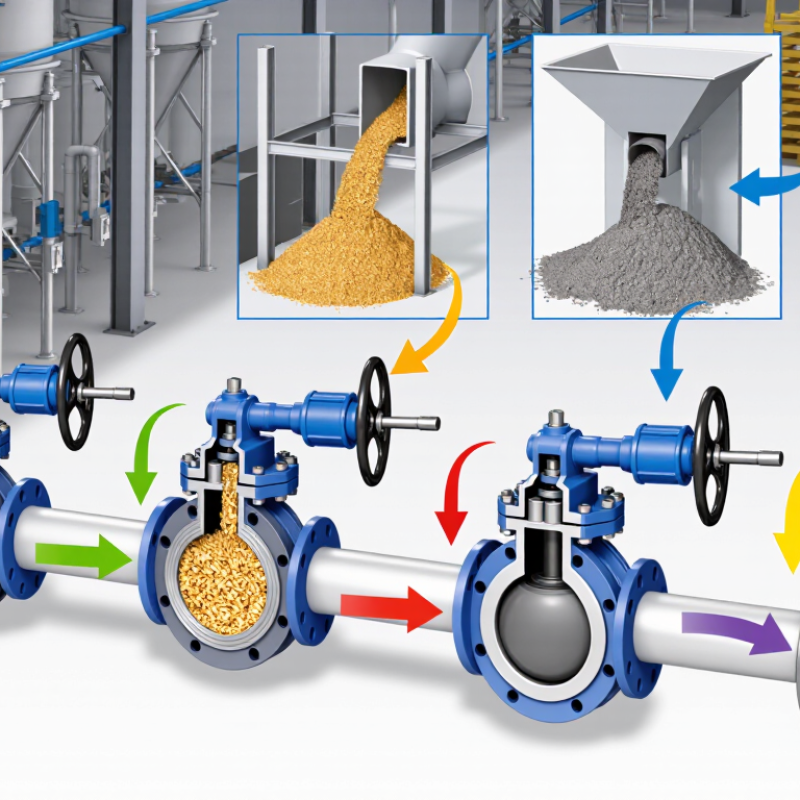
Select a slide gate valve by matching its purpose with the process conditions. Dry powder isolation typically requires low pressure and moderate temperature resistance, while abrasive solids, hot ash, and pneumatic conveying demand stronger sealing, wear resistance, or higher temperature capability. The values shown are representative engineering reference ranges; confirm the final selection with the actual process data.

Match Valve Materials to the Process Conditions

How to Choose the Right Slide Gate Valve?

Match Valve Materials to the Process Conditions

Choosing a slide gate valve starts with the process, not the catalog. Match every wetted component to actual conditions. Carbon steel suits many dry, noncorrosive materials. Stainless steel is safer when moisture, chlorides, or cleaning chemicals are present. Still, stainless steel is not automatically corrosion-proof. Temperature and pressure also narrow the choice.

Seals deserve equal attention. PTFE handles many chemicals, while elastomers may perform better in selected temperatures and slurry services. A common mistake is treating the valve body as the whole decision. The gate, seat, stem, and seals can fail first. Check compatibility charts against the real concentration, temperature, and exposure time. Small changes matter.

Abrasive powder can wear a soft gate quickly. Dense slurry needs careful attention to erosion, buildup, and flushing. Hardened surfaces or replaceable wear components may extend service life. However, harder materials can increase cost and complicate maintenance. That trade-off deserves honest review. Do not size the valve by line diameter alone. Confirm solids size, cycle frequency, pressure difference, flow direction, and cleaning method. Field conditions often differ from laboratory data. Request test evidence, material certificates, and inspection records before approval. Then question the selection once more.

How to Choose the Right Slide Gate Valve? - Match Valve Materials to the Process Conditions
Process Condition Typical Service Recommended Body and Gate Material Recommended Seat or Seal Material Typical Temperature Guidance Key Selection Considerations
Dry, non-abrasive bulk solids Grain, plastic pellets, flour, powder, and general material handling EPDM or NBR for standard applications; PTFE where low friction and chemical resistance are important Usually selected for ambient to moderate temperatures; verify the seal rating separately Use a full-port design where possible to reduce material buildup. A slide gate valve is normally intended for isolation rather than continuous throttling.
Abrasive dry solids Fly ash, cement, sand, minerals, glass cullet, and crushed materials Metal-to-metal seating, hardened gate surfaces, or abrasion-resistant inserts Temperature selection depends on the body, liner, and actuator materials Prioritize wear resistance, replaceable wear components, and a gate profile that limits particle wedging. Soft elastomer seats may wear quickly.
Moist or mildly corrosive solids Wet ash, fertilizer materials, salts, and chemically treated powders EPDM for many water-based services; PTFE for broad chemical resistance; confirm compatibility with the actual chemical Limited by the lowest-rated component, often the seat or packing Consider corrosion under deposits, washdown exposure, and galvanic compatibility between the valve and connected equipment.
Water and neutral liquids Utility water, cooling water, and wastewater isolation Carbon steel with suitable internal protection or stainless steel for corrosive water conditions EPDM is commonly selected for water service; NBR is more suitable where oil contamination may occur Commonly suitable for low to moderate temperatures when the elastomer rating is respected Confirm that the slide gate valve design is intended for liquid service. Prevent solids from obstructing the gate and avoid using the valve for precision flow control.
Oily or hydrocarbon-contaminated material Oil-bearing powders, oily wastewater, and hydrocarbon-related handling systems Carbon steel for general service; stainless steel when corrosion or cleaning requirements justify it Seal temperature limits vary significantly by compound and formulation Do not assume EPDM compatibility with oils or hydrocarbons. Check swelling, hardness change, and permeation data before final selection.
Food, pharmaceutical, or hygienic processing Dry ingredients, powders, granules, and sanitary material transfer Food-contact-compliant EPDM, PTFE, or other approved elastomer selected for the process Depends on the cleaning, sterilization, and product temperature cycle Specify surface finish, crevice control, drainability, clean-in-place requirements, and applicable food-contact compliance documentation.
High-temperature dry solids Hot ash, clinker, furnace discharge, and heated mineral products Metal-to-metal seating or high-temperature packing; avoid standard elastomers unless specifically rated Metal components may tolerate high temperatures, but packing, bearings, coatings, and actuators may have lower limits Evaluate heat transfer to the actuator, thermal distortion, oxidation, and the need for cooling or a remote actuator arrangement.
Chemically aggressive powders or liquids Acids, alkalis, solvents, and reactive process chemicals PTFE is broadly chemical-resistant, but compatibility must be checked for temperature, concentration, and permeation Use the chemical manufacturer's compatibility data together with the valve's pressure-temperature rating Material selection must consider concentration, contaminants, operating temperature, corrosion rate, and potential stress-corrosion cracking.
Dust-tight isolation service Fine powders, dust collection systems, and enclosed conveying equipment Carbon steel or stainless steel, depending on corrosion, hygiene, and static-control requirements Confirm the seal's continuous and intermittent temperature limits Check leakage requirements, seal compression, shaft or stem protection, and whether the valve is suitable for the system pressure and vacuum conditions.
Selection note: The temperature ranges and material choices above are general engineering guidance, not a substitute for the valve's certified pressure-temperature rating. Final selection should verify media compatibility, pressure or vacuum, particle size, abrasiveness, operating frequency, leakage requirements, cleaning method, and actuator limitations.

Compare Gate Designs, Seals, and Actuation Options

How to Choose the Right Slide Gate Valve?

The right gate design depends on the material, pressure, temperature, and required shutoff. For dry powders and granules, a slide gate can provide a straight, low-resistance flow path. A knife-edge design may cut through fibrous material or settled solids more effectively. Conventional wedge gates suit many liquid isolation duties, but they may not handle heavy solids well. Small details matter. Check the valve’s clearance, body strength, and installation position before selecting it.

Seal selection requires practical judgment. Resilient seats usually offer tighter closure with clean liquids and moderate temperatures. They can wear quickly when abrasive particles pass through the valve. Metal seats tolerate heat and abrasion better, but minor leakage may be acceptable. Packing around the stem also deserves attention. Poor packing adjustment can cause leakage, excessive operating force, or premature stem wear. Temperature charts are useful, but real service conditions can be less predictable.

Actuation should match the cycle rate and safety requirement. A handwheel works for occasional isolation and gives direct feedback. Pneumatic actuators respond quickly and suit frequent operation, especially where compressed air is already available. Electric actuators support remote control but require careful torque and limit-switch settings. Hydraulic systems provide high force for large valves. They also add maintenance points. A common mistake is sizing the actuator only by valve diameter. Test the valve with actual material, not water alone. Dust buildup, misalignment, and cold starts can change performance. There is no universal best design.

Select the Correct Valve Size and Pressure Rating

Choosing the right slide gate valve starts with accurate sizing and pressure evaluation. Match the valve’s nominal size to the pipeline, but do not rely on pipe diameter alone. Consider material flow, particle size, moisture, and required discharge rate. A valve that is too small may restrict flow and wear quickly. One that is too large can increase cost and reduce control.

Pressure rating requires closer attention. Confirm the normal operating pressure, possible surges, temperature, and vacuum conditions. Pressure ratings may decrease at higher temperatures. The valve must also suit the medium’s abrasiveness and sealing requirements. Check flange dimensions, face-to-face length, and actuator force before ordering. I have seen installations fail because the nominal size matched, but the flange pattern did not.

Tips: Record real operating conditions, not only design values. Leave a safety margin for pressure spikes. Review the applicable piping code and technical data sheet. Ask whether the valve is designed for isolation, throttling, or both. Slide gate valves often perform best as isolation devices. Using one for continuous throttling may cause uneven wear. That assumption deserves review. Select materials based on actual service conditions, including dust, heat, corrosion, and cleaning methods. A final field check can prevent an expensive change later.

Check Installation, Maintenance, and Safety Requirements

Choosing a slide gate valve starts with the installation environment, not only pipe size. In the field, a valve can fit the drawing yet fail when the pipeline is misaligned. Confirm media type, pressure, temperature, particle size, and flow direction before ordering. Heavy slurry may demand abrasion-resistant components, while dry powder can expose leakage around the gate. Keep enough clearance for the actuator, inspection cover, and safe operator access. Support nearby piping independently; the valve should not carry unwanted line loads. Small alignment errors become serious wear.

Before installation, isolate pressure and drain trapped material. Verify zero energy with the site procedure, then use suitable protective equipment. Hands must stay clear of the gate path and actuator linkage. Install the valve square to the pipeline, check gasket seating, and tighten fasteners in a cross pattern. Do not force a stiff gate with an oversized wrench. That shortcut can damage seals and hide a deeper alignment problem. After installation, cycle the valve slowly and inspect for rubbing, leakage, unusual noise, or delayed movement.

Maintenance should follow actual service conditions, not a calendar alone. Inspect the gate edge, seals, stem, fasteners, and actuator connections during planned shutdowns. Remove buildup before it hardens. Lubricate only components approved for the process environment; incompatible lubricant may contaminate material or swell seals. Record cycle count, leakage observations, and replaced parts. These records help identify gradual wear before failure. Still, inspection is not perfect. Dust can conceal cracks, and a clean external surface proves little. When a safety device, interlock, or actuator behaves unexpectedly, stop operation and involve a qualified technician under applicable site requirements.