Choosing the 2026 best Rack Accessories requires more than comparing prices or polished product photos. Buyers must examine load ratings, steel thickness, corrosion protection, installation methods, and compatibility with existing storage systems. A small mismatch can create costly rework. Sometimes, the cheapest accessory becomes the least economical choice.
Industry reports show why this decision matters. MHI’s 2024 Annual Industry Report highlights labor pressure, inventory visibility, and supply-chain resilience as major investment priorities. Grand View Research also forecasts continued growth in warehouse racking through 2030, driven by e-commerce, automation, and space optimization. These trends are reshaping demand for dividers, safety barriers, decking, pallet supports, and rack protection. However, market growth does not guarantee product quality. Buyers still need verifiable test data and traceable specifications.
MHI President and CEO John Paxton has described supply chains as “the backbone of our economy.” That principle applies directly to Rack Accessories. A rack guard protects more than steel. It protects uptime, workers, inventory, and confidence in daily operations. The best 2026 choices should match the facility’s pallet dimensions, forklift traffic, humidity, and expansion plans. Buyers should request engineering drawings, installation guidance, and documented compliance before ordering. Even experienced teams can overlook aisle clearance or uneven floors. That deserves reflection. A technically strong accessory may still fail when installation discipline is weak. This guide compares practical options, measurable performance, and long-term value for informed purchasing decisions.
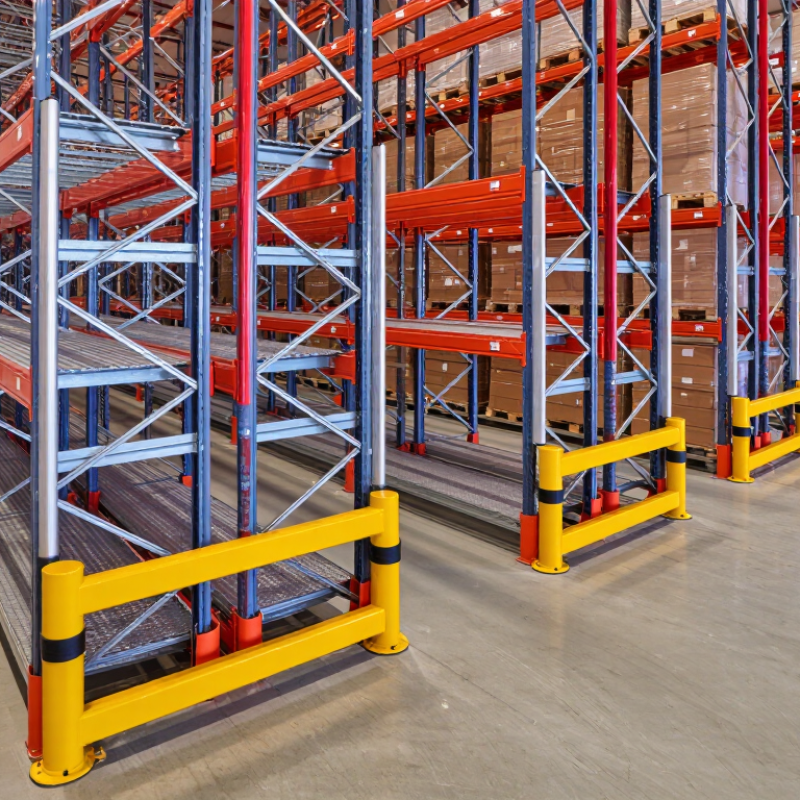
Rack accessories are the working parts that make storage systems safer, clearer, and easier to adjust. They include wire decking, safety pins, column guards, back mesh, dividers, labels, and load-support bars. A rack without suitable accessories may hold products, but it often handles change poorly. A busy aisle shows why. Bent uprights, missing labels, or uneven pallets can slow picking and create avoidable risks.
The best 2026 accessories should match load weight, pallet size, aisle activity, and inspection routines.
Wire decking helps distribute pallet loads and reduces falling-item exposure. Column guards protect uprights near forklifts. Back mesh and anti-collapse panels add control where pedestrian traffic exists. Clear location labels support faster counting and digital inventory checks.
The 2024 MHI Annual Industry Report identified inventory and network optimization as a major technology priority, with adoption expected to rise sharply within five years. Accessories now support that shift by making rack locations more visible and measurable.
Safety still needs practical judgment. The U.S. Bureau of Labor Statistics reported a recordable injury rate of 4.8 cases per 100 full-time workers for warehousing and storage in 2023.
Accessories cannot replace training or inspections. They can reduce weak points. Buyers should verify rated capacities, installation quality, corrosion resistance, and compatibility with existing frames. Cheap protection can become expensive.
I have seen well-organized racks fail because one overlooked beam connector was loose. That detail deserves more attention.

What Are the 2026 Best Rack Accessories for Buyers?
In 2026, buyers should evaluate rack accessories as infrastructure, not decoration. Start with measured load, rack depth, mounting holes, and service clearance. A shelf that supports 60 kilograms may fail when equipment vibrates or cables pull sideways. Check steel thickness, fastener quality, and adjustable rails. Small details matter. Accessories should also support clear labeling and tool-free maintenance where practical.
Airflow deserves equal attention. Blanking panels, brush strips, and organized cable managers can reduce bypass air and hot spots. ASHRAE guidance places the recommended server inlet range around 18–27°C for common data-center environments. Uptime Institute’s 2024 Global Data Center Survey identifies power and cooling as continuing reliability concerns. The IEA estimates data centers used about 240–340 terawatt-hours globally in 2022, with demand potentially reaching 620–1,050 TWh by 2026. Efficient rack layouts are no longer merely technical preferences.
Buyers should request compatibility drawings, thermal test data, weight ratings, and replacement lead times. Verify claims against recognized safety and installation standards. I have seen cable accessories chosen for appearance, then removed because they blocked service access. That was a poor evaluation. Total cost includes labor, downtime risk, energy use, and disposal. Modular accessories often adapt better, but “modular” does not guarantee strength. Test one complete rack before approving a larger purchase.
The best 2026 rack accessories should make storage orderly, safer, and easier to reach. Wire decking prevents loose cartons from falling through beams. Upright guards protect frames from pallet-truck impacts. Load plaques show maximum capacity at eye level. OSHA requires stored materials to remain stable and secure, making visible capacity information a practical control.
Safety deserves measurable attention. The U.S. Bureau of Labor Statistics reported more than 900,000 private-industry cases involving days away, job transfer, or restriction in 2023. Not every case involved racking, but poor handling and blocked aisles can increase exposure. Add rack safety netting, end-of-aisle barriers, and bright location labels. Keep pedestrian routes visibly separate. Small details matter.
Accessibility also needs field testing, not assumptions. Place frequently handled cartons between knee and shoulder height. Use pull-out shelves, step platforms with handrails, and smooth label holders. The 2024 MHI Annual Industry Report found that 83% of supply-chain leaders expected technology investment to increase, yet accessories still support daily human work. A scanner cannot fix an unreachable bin. Measure aisle clearance with loaded carts, then repeat the test during peak activity. My practical mistake was judging access from an empty aisle. Real warehouses are rarely that forgiving.
What Are the 2026 Best Rack Accessories for Buyers?
The best rack accessory depends on the load, access frequency, and available floor space. Start by measuring the rack, aisle width, and stored items. Heavy cartons need reinforced beams, pallet supports, or wire decking. These parts reduce sagging and create a steadier storage surface. Small components need bins, dividers, and label holders. They prevent loose items from disappearing behind larger boxes. For long materials, cantilever arms or adjustable supports usually work better than standard shelves. Do not assume one accessory fits every bay.
Tips: Match each accessory to a clear storage problem. Check its rated capacity, dimensions, finish, and installation method. Keep frequently handled products between waist and shoulder height. Place rarely used stock higher, but inspect it more often. A simple sketch can reveal blocked aisles before purchasing.
In real facilities, adjustable accessories offer useful flexibility when inventory changes. Closed panels may suit dusty areas, while open decking improves visibility and airflow. Safety posts and end-of-aisle guards help protect rack frames from moving equipment. Use them where traffic is unavoidable. I have found that poorly chosen dividers waste space quickly, especially when product sizes vary. That detail is easy to miss. Review the rack after a trial load, not only before installation. A small adjustment can improve picking speed, stability, and long-term maintenance.
Rack accessory buying in 2026 will focus on efficiency, visibility, and thermal control. The IEA’s Electricity 2024 report projects data-center electricity demand could reach about 1,000 TWh by 2026, compared with 460 TWh in 2022. This pressure makes intelligent power distribution units more important. Buyers should seek branch-level metering, remote alerts, and clear load records.
Liquid-cooling accessories are also moving closer to mainstream adoption. Leak-detection cables, coolant distribution units, quick-disconnect fittings, and reinforced rack floors deserve careful review. Uptime Institute’s annual outage research continues to identify power and cooling failures as major operational risks. However, a trend is not proof. A liquid-cooling upgrade may create service problems if technicians lack training or aisle space. That part is often underestimated.
Tips: Measure actual heat density before ordering accessories. Check rack depth, static load, connector compatibility, and maintenance clearance. Use temperature sensors at the rack’s upper, middle, and lower sections. Buyers should also inspect cable pathways, airflow panels, and blanking panels during a physical site walk. Modular accessories with repairable parts may reduce replacement waste, but sustainability claims need supplier documentation. I would not trust a “future-ready” label alone. Test the fit first.
| Rack accessory category | Typical specification or dimension | Primary buyer problem solved | Relevant standard or compatibility point | 2026 buying trend to monitor | Key evaluation criteria |
|---|---|---|---|---|---|
| Blanking panels | 19-inch rack width; common heights include 1U, 2U and 4U. One rack unit (1U) equals 44.45 mm. | Reduces bypass airflow and helps maintain more consistent cooling through occupied equipment. | Should match the rack’s 19-inch mounting system and the enclosure’s square-hole, round-hole or threaded-hole pattern. | More attention to airflow containment, lower cooling waste and tool-less installation. | Panel height accuracy, mounting method, fire rating where required, finish quality and reusability. |
| Vertical and horizontal cable managers | Horizontal sizes commonly occupy 1U or 2U; vertical managers are selected by available side channel width and rack height. | Controls bend radius, prevents cable congestion and improves service access. | Cable pathways should support the minimum bend radius specified for the installed copper or fiber cable. | Higher demand for modular fingers, removable covers, high-density routing and separation of power and data cables. | Usable pathway area, finger spacing, cover access, load capacity and compatibility with patch panels. |
| Intelligent power distribution units | Vertical or horizontal rack mounting; outlet count, input voltage, phase and current rating must match the installation. | Distributes power and provides visibility into rack-level energy use and load conditions. | Verify electrical ratings, plug and outlet types, overcurrent protection and applicable local electrical requirements. | Greater use of networked monitoring, outlet-level measurement, remote switching and alert integration. | Measurement accuracy, alarm functions, network security, phase balance and firmware update process. |
| Sliding shelves and fixed shelves | Common mounting heights range from 1U to 2U; depth and load rating must match the rack and equipment. | Supports non-rack-mountable equipment, test devices and compact edge-computing hardware. | Check mounting-hole type, usable depth, rail clearance and the shelf’s static and sliding load ratings. | Demand is shifting toward adjustable-depth shelves and higher load capacity for edge deployments. | Rated load, vibration resistance, depth adjustment, front and rear support, and cable clearance. |
| Brush cable-entry panels | Available in common 1U and 2U rack heights with brush openings sized for overhead or underfloor cable entry. | Allows cable passage while limiting dust entry and uncontrolled air leakage. | Must fit the rack opening and preserve cable bend radius at the entry point. | More use in compact edge racks where cable routing, dust control and airflow efficiency are combined. | Brush density, opening size, replaceable bristles, sealing performance and tool-less access. |
| Rack rails and cage nuts | 19-inch mounting rails with square-hole, round-hole or threaded-hole options; cage nuts are commonly M6 or 10-32 depending on the system. | Provides secure equipment mounting and simplifies replacement or reconfiguration. | Confirm hole pattern, thread size, vertical rack-unit marking and front-to-rear adjustment range. | Preference for adjustable rails that support mixed equipment depths and repeated deployment changes. | Load rating, adjustment range, installation tolerance, fastener retention and corrosion resistance. |
| Rack airflow panels and fan trays | Fan trays may occupy 1U, 2U or more; airflow capacity is normally stated in cubic feet per minute or cubic metres per hour. | Improves heat removal in high-density or poorly ventilated rack zones. | Airflow direction should support the equipment’s front-to-rear cooling path and the rack’s containment design. | More demand for temperature-controlled fan speed, hot-swappable fan modules and lower acoustic output. | Airflow rate, static pressure, acoustic level, fan redundancy, power draw and thermal control accuracy. |
| Environmental sensors | Common measurements include temperature, relative humidity, water leakage, smoke indication and door status. | Provides early warning of overheating, moisture, unauthorized access and local environmental changes. | Check communication protocol, sensor placement, calibration method and integration with the existing monitoring system. | Movement toward distributed sensing, automated alerts and sensor data integration with infrastructure monitoring platforms. | Measurement range, accuracy, alert latency, battery or power requirements and cybersecurity controls. |
| Security locks and access controls | Options include mechanical swing-handle locks, electronic locks, door contacts and removable-panel locks. | Restricts physical access and supports auditability for equipment in shared or remote locations. | Confirm door construction, emergency override, power-failure behavior and compatibility with site access policies. | Increasing focus on remote access records, tamper alerts and integration with facility security systems. | Authentication method, event logging, fail-safe or fail-secure operation, battery backup and retrofit complexity. |
| Seismic and anti-tip accessories | Includes anchoring kits, stabilizer feet, joining kits and retaining hardware sized for the rack structure and installation surface. | Reduces movement, tipping and equipment displacement during vibration or seismic events. | Selection must follow the building’s seismic design requirements and the rack manufacturer’s tested installation method. | More frequent inclusion in edge sites, industrial facilities and installations located in higher-risk regions. | Certified load performance, anchoring surface, installation torque, floor condition and inspection requirements. |
| Rack grounding and bonding kits | Typically includes bonding conductors, lugs, star washers and grounding points for doors, panels and frame sections. | Helps establish electrical continuity across removable rack components and supports safe installation practices. | Follow applicable electrical codes, site grounding design and the rack system’s bonding instructions. | Growing emphasis on documented grounding, faster commissioning and safer dense-power installations. | Conductor size, connection integrity, corrosion resistance, labeling and testability after installation. |
Buyer note: Rack fit should be verified against the enclosure’s mounting-hole pattern, usable depth, load rating, electrical requirements and applicable local safety codes before purchase.
Same Day Shipping
ISO Certified Production