Global electrical demand is rising, and protection equipment must keep pace. The International Energy Agency’s Electricity 2024 report projects average global electricity demand growth of about 3.4% annually from 2024 to 2026. More buildings, factories, charging stations, and distributed energy systems require dependable residual-current protection.
This is where an Elcb Circuit Breaker becomes important. It can help detect leakage currents and reduce risks of electric shock, insulation damage, and electrical fires. However, product quality depends on more than a printed rating. Buyers should examine tripping sensitivity, response time, pole configuration, short-circuit capacity, temperature performance, and certification records.
China has a broad manufacturing base for low-voltage electrical equipment. Many Chinese suppliers provide ELCB, RCCB, and RCBO products for residential, commercial, and industrial applications. Yet terminology can be confusing. In modern international markets, “ELCB” may describe different protection technologies, while IEC 61008 and IEC 61009 distinguish residual-current devices by function and application.
A reliable supplier should explain these differences clearly. It should also provide traceable test reports, factory quality controls, sample verification, and consistent production records. Reports from MarketsandMarkets and Grand View Research indicate continuing growth in the global circuit protection and low-voltage switchgear sectors, driven by infrastructure upgrades and electrification.
Price still matters. It should not lead the decision.
The lowest quotation may hide weaker materials, limited testing, or unstable after-sales support. No supplier ranking remains perfect forever. Buyers should compare evidence, not advertising claims, and confirm whether each product matches local grid conditions, installation rules, and recognized IEC requirements.
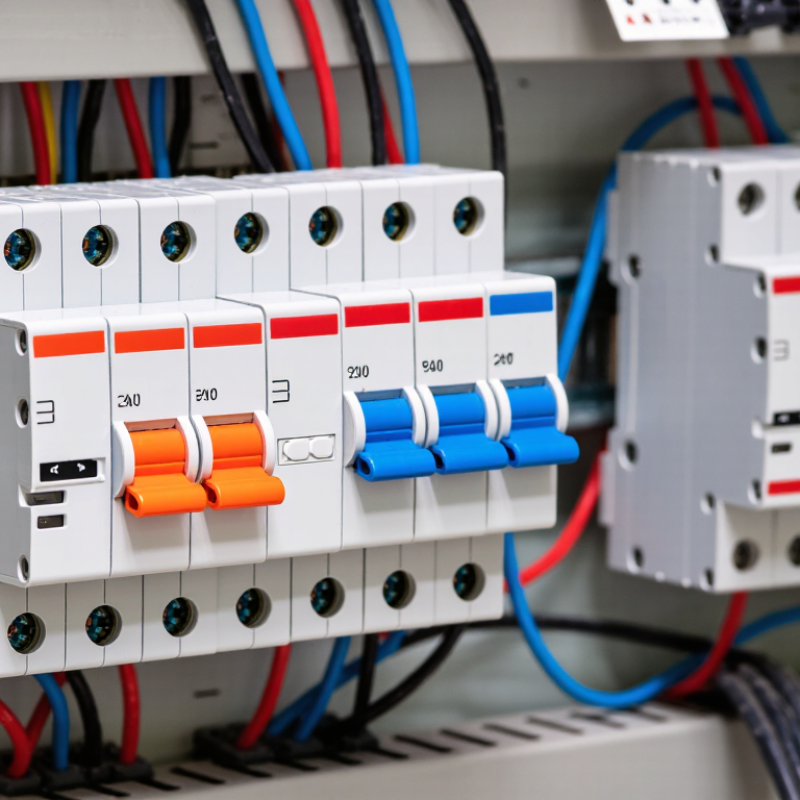
ELCB circuit breakers help reduce electric shock and fire risks by detecting abnormal leakage paths.
The terminology is not always tidy. Older voltage-operated ELCBs sense voltage on exposed metal parts, while modern current-operated devices compare live and neutral currents. When the difference exceeds the set value, the mechanism trips and disconnects the circuit within a short time.
For homes, offices, and light workshops, residual-current protection is often used on socket and wet-area circuits. Higher-rated units may protect feeders, pumps, machinery, or temporary construction supplies. Select the rated current, tripping sensitivity, pole arrangement, and short-circuit capacity carefully.
A 30 mA setting is commonly used for personal protection, while higher settings may support equipment or upstream coordination. Actual requirements depend on the installation and local standards. A device can pass a factory check and still be wrong for a wet workshop.
Tips: Check the enclosure, wiring diagram, terminal markings, and certification before purchase. Test the unit with its test button at scheduled intervals. Do not treat the breaker as a substitute for grounding, insulation checks, or proper maintenance. Match the breaker with the distribution board and cable size. For global buyers, request test reports, operating-temperature data, and clear installation instructions. Some specifications look complete but omit trip-time details. Ask again.

For global buyers, ELCB safety begins with the correct product definition. Traditional voltage-operated ELCBs differ from modern residual-current devices. Many suppliers use ELCB as a general term for RCCBs or RCBOs. That can create costly misunderstandings. Confirm the device principle, rated residual current, breaking capacity, and pole configuration before ordering.
IEC 61008-1 covers residual-current circuit breakers without overcurrent protection. IEC 61009-1 applies to RCBOs with overcurrent protection. IEC 60364-4-41 provides international guidance for protection against electric shock. Regional requirements may also apply, such as UL 943 in North America or national certification rules elsewhere. A test report alone is not enough. Verify the certificate scope, production site, test laboratory, and current revision.
Field performance depends on more than compliance labels. Check trip-time curves, temperature limits, terminal torque, insulation resistance, and resistance to nuisance tripping. Type AC may not suit equipment producing pulsating direct current. Type A, F, or B devices can be necessary, depending on the load. NFPA’s Fire Loss in the United States During 2022 reported about 24,200 home fires involving electrical distribution and lighting equipment. The report also recorded 295 civilian deaths. Small details matter. Yet buyers sometimes overlook local earthing systems and neutral arrangements. That mistake deserves more attention. Require sample testing, traceable serial records, and clear installation instructions before approving large-volume shipments.
This chart shows the maximum tripping times specified for non-time-delayed residual current devices under IEC 61008-1 and IEC 61009-1 test conditions. Actual requirements may vary by device type, rated residual operating current, and local adoption of IEC standards.
Reference: IEC 61008-1 and IEC 61009-1 non-time-delayed device test limits. At 1× IΔn, the maximum tripping time is 300 ms; at 2× IΔn, 150 ms; and at 5× IΔn, 40 ms.
China Best ELCB Circuit Breaker Suppliers for Global Buyers?
Evaluating ELCB circuit breaker suppliers requires more than comparing unit prices. The IEA Electricity 2024 report forecasts global electricity demand will grow by about 4% annually from 2024 to 2026. This growth increases demand for dependable protection equipment. Check whether the supplier clearly distinguishes voltage-operated ELCBs from modern RCCBs and RCBOs. Ask for test records based on IEC 61008-1 or IEC 61009-1, where applicable. Certificates should match the exact model, rated current, trip sensitivity, and production site.
Factory evidence matters. Request sample inspection reports, calibration records, and routine test procedures. A reliable supplier should demonstrate residual-current testing, dielectric testing, temperature-rise checks, and mechanical endurance results. Ask how operators control terminal torque on the production line. Small errors there can create hot spots inside a crowded distribution board. The ISO Survey 2022 shows that certified quality systems remain widely used across global manufacturing, but certification alone cannot prove stable batch quality. A polished certificate is not enough.
Review five to ten production batches when possible. Compare trip-time data, molding quality, label accuracy, and packaging protection. I have found that suppliers often explain failures well, but fewer measure them consistently. That difference deserves attention. Request an independent pre-shipment inspection, especially for unfamiliar factories. Also examine warranty terms, spare-part access, complaint response time, and technical documents in clear English. The cheapest quotation may hide limited testing, uncertain component sourcing, or weak traceability. Check the details before committing.
When comparing China’s ELCB circuit breaker suppliers, product capability should be checked beyond catalog pages. A reliable supplier should explain rated current, voltage, poles, residual operating current, breaking capacity, and trip time clearly. Ask whether the range includes RCCBs, RCBOs, and suitable AC, A, F, or B residual-current types. Small details matter.
Certification claims require careful verification. Request current test reports, certificates, factory addresses, and matching model numbers. IEC 61008 or IEC 61009 compliance can support international procurement, while CE, CB, UL, or other marks may depend on the destination market. A certificate alone is not enough. Check the issuing body, scope, expiry date, and whether production remains consistent. Some documents look complete but cover only one rating.
Factory capability becomes visible through samples and records. Review automated assembly, calibration equipment, dielectric testing, temperature-rise checks, and final trip testing. Ask for batch traceability and a documented quality plan. Suppliers with engineering teams can usually adapt terminal layouts, auxiliary contacts, enclosure sizes, and labeling for different installations. Yet customization may weaken delivery control if specifications change too often. A practical evaluation should include sample testing, third-party inspection, and a small trial order. No supplier is perfect; even a strong factory may show uneven documentation or slower communication during peak seasons.
| Comparison Area | Product or Capability | Relevant Standard or Technical Fact | What Global Buyers Should Verify |
|---|---|---|---|
| Residual-current protection | RCCB (also called RCD in many markets) | IEC 61008-1 covers residual current operated circuit-breakers without integral overcurrent protection. | Request the exact model’s test reports, rated residual operating current, pole configuration, rated current, and declared operating characteristics. |
| Combined residual-current and overcurrent protection | RCBO | IEC 61009-1 covers residual current operated circuit-breakers with integral overcurrent protection. | Check that the documentation identifies both residual-current protection and overcurrent protection, including the applicable trip curve and rated breaking capacity. |
| Industrial circuit-breaker range | Low-voltage circuit-breakers, including products designed for industrial distribution | IEC 60947-2 applies to circuit-breakers within the scope of the low-voltage switchgear and controlgear series. It is not interchangeable with IEC 61008-1 or IEC 61009-1. | Confirm the product’s intended application, rated voltage, rated current, and short-circuit performance against the project specification. |
| ELCB terminology | Legacy or market-specific use of “ELCB” | “ELCB” is used inconsistently in trade and regional usage. Buyers should establish whether the offered device is an RCCB/RCD, an RCBO, or another type of protective device. | Use the product’s standard, wiring diagram, and declared protection functions—not the ELCB label alone—to identify the device. |
| Residual-current type | Type AC, Type A, and other declared RCD types | RCD types differ in the residual-current waveforms they are designed to detect. Suitability depends on the connected loads and applicable installation rules. | Ask for the declared RCD type and confirm it matches the equipment, local electrical code, and project design. |
| Certification and conformity | Product certificates and test documentation | A reference to an IEC standard is not, by itself, proof that a specific model has been independently certified or tested. | Verify certificate issuer, certificate validity, model numbers, factory scope, applicable standard edition, and whether the supplied model is covered. |
| Factory quality capability | Production controls and routine testing | Quality-system certificates and product approvals have different scopes; neither should be assumed to cover every product or production site. | Request the manufacturing-site address, quality-system scope, routine inspection records, traceability method, and sample test documentation. |
| Product range and customization | Pole count, rated current, residual operating current, accessories, and enclosure options | Available ratings and configurations vary by product series and market; there is no single universal range for all suppliers. | Compare model-specific datasheets and confirm accessory compatibility, terminal arrangement, dimensions, and requested ratings before ordering. |
| Export readiness | Documentation, labeling, packaging, and destination-market support | Market access requirements depend on the destination country, product category, and intended installation. | Confirm local conformity requirements, language and label needs, shipping documents, warranty terms, and after-sales arrangements before purchase. |
China Best ELCB Circuit Breaker Suppliers for Global Buyers?
Global buyers should assess ELCB suppliers beyond price and catalog images. Confirm rated voltage, frequency, poles, leakage trip current, and breaking capacity. These details must match the destination market and the final electrical installation. Ask for current test reports, product drawings, and certification documents required by local regulations.
Quality control should be visible, not merely promised. Reliable factories can explain incoming material checks, assembly inspection, and routine electrical testing. Request sample records showing trip-time results and insulation performance. During a factory audit, inspect calibrated test equipment, date-coded labels, carton protection, and batch traceability. Small details matter.
Export experience also affects purchasing risk. Check whether the supplier can prepare accurate commercial invoices, packing lists, shipping marks, and technical files. Discuss lead times in writing, including sample approval and production schedules. For repeat orders, agree on inspection standards before payment. A pre-shipment inspection can catch loose terminals, damaged housings, or incorrect ratings.
No supplier is flawless. A low quotation may hide weaker testing or unstable components. Ask difficult questions. Notice vague answers. One practical approach is ordering a small trial batch before committing to larger volumes. Keep retained samples for future comparison. After-sales support should include fault analysis, replacement procedures, and clear communication across time zones.
Same Day Shipping
ISO Certified Production